24/7 Emergency Service
(704) 385-1018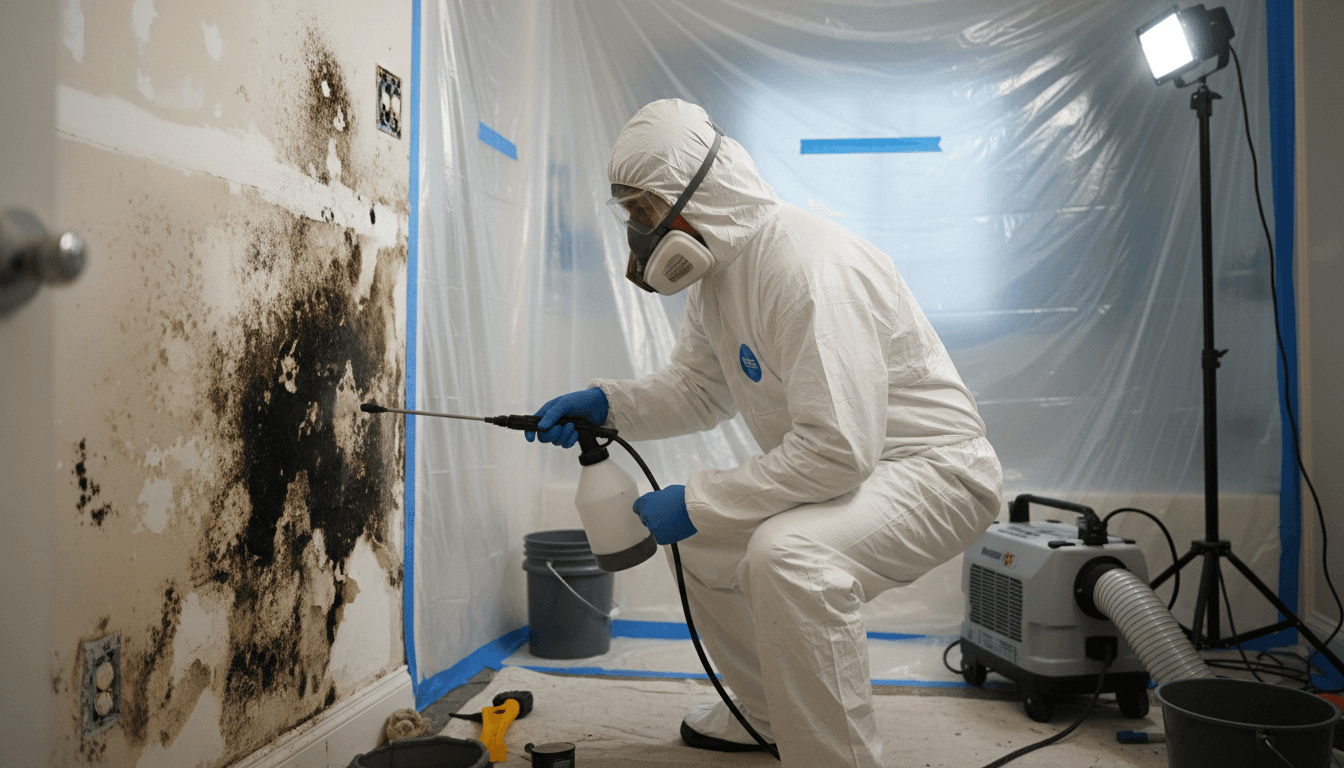
Mold Inspection & Remediation
Professional mold testing, containment, and remediation for Charlotte properties with water damage or moisture problems.
Charlotte's climate is practically engineered for mold growth. With average relative humidity above 70% from May through September, summer dew points that regularly hit the mid-70s, and warm temperatures that keep mold spores metabolically active nearly year-round, the Charlotte metro area presents one of the more challenging environments in the Southeast for mold prevention. When you add water damage — a burst pipe, a slow leak behind a shower wall, condensation in an uninsulated crawl space — mold colonization can begin within 24 to 48 hours.
At Charlotte Water Damage Restoration, we handle mold from initial inspection through final clearance testing. Our remediation process follows IICRC S520 standards and North Carolina's guidelines for mold assessment and remediation, ensuring the work is done correctly and documented thoroughly.
Our inspection process starts with a visual assessment and interview — when did you first notice the mold or musty smell, has there been any water damage or plumbing issues, and where is the moisture coming from? We then use moisture meters, thermal imaging cameras, and hygrometers to identify the moisture source and map its extent. In many Charlotte homes, we find mold problems that trace back to specific construction-era vulnerabilities: 1940s-1960s homes in neighborhoods like Cotswold, Sherwood Forest, and Beverly Woods often have inadequate crawl space ventilation and original cast-iron drain lines that develop pinhole leaks. Newer construction in areas like Ballantyne, Highland Creek, and Steele Creek can develop mold behind vinyl-clad walls where bulk water intrusion gets trapped without a drying path.
If the scope of the mold contamination isn't visually clear, we collect air and surface samples for laboratory analysis. Air sampling identifies the types and concentrations of mold spores present in your indoor environment compared to the outdoor baseline. Surface sampling (tape lift or swab) identifies the specific species growing on affected materials. The most common species we encounter in Charlotte homes are Cladosporium, Aspergillus, Penicillium, and Stachybotrys chartarum (the notorious "black mold") — each requiring specific handling protocols.
Once we understand what we're dealing with, we establish containment. This means sealing off the affected area with polyethylene sheeting, creating negative air pressure with HEPA-filtered air scrubbers to prevent spore migration to clean areas, and establishing controlled entry and exit points. Our crews wear full PPE including N-95 or P-100 respirators, Tyvek suits, and gloves throughout the remediation process.
Remediation itself involves removing mold-affected porous materials — drywall, insulation, carpet, and ceiling tiles that are visibly colonized. Non-porous and semi-porous surfaces like framing lumber, concrete, and metal are cleaned with HEPA vacuums, wire brushing, and antimicrobial treatments. We do not simply paint over mold or apply encapsulants as a substitute for proper removal — that's a shortcut that leads to recurrence.
Your HVAC system gets attention too. Mold spores circulate through ductwork and can colonize inside air handlers, on evaporator coils, and in duct insulation. We inspect the system and clean or treat affected components. In Charlotte's climate, where air conditioning runs 6-7 months per year, the HVAC system is often both a victim and a vector for mold contamination.
After remediation, we address the moisture source that caused the problem in the first place. Mold removal without moisture correction is temporary — the mold will return. Whether it's a plumbing repair, improved crawl space encapsulation, better bathroom ventilation, or grading correction around your foundation, we identify the fix and either perform it or coordinate with the appropriate trade.
The final step is post-remediation verification. We hire an independent third-party testing firm — not our own company — to conduct clearance air sampling. This ensures the mold spore counts in the remediated area meet acceptable levels and that our work passes an objective review. We don't consider the job complete until the clearance report comes back clean.
Call (704) 385-1018 if you've spotted mold, smell a persistent musty odor, or recently had water damage that wasn't dried within 48 hours. The longer mold grows unchecked, the more material has to be removed — and the higher the remediation cost.
Our process
How we handle mold inspection & remediation in Charlotte, step by step.
- 1
Inspection & moisture source identification
Visual assessment, moisture meters, thermal imaging, and hygrometers locate the mold growth and its underlying moisture source. We map the full extent of the problem.
- 2
Air & surface sampling (if needed)
Lab-analyzed samples identify mold species and spore concentrations. Air samples compare indoor levels to outdoor baselines to quantify the contamination.
- 3
Containment setup
Polyethylene barriers, negative air pressure with HEPA filtration, and controlled access points prevent spore migration to unaffected areas of your home.
- 4
Mold removal & material demolition
Colonized porous materials are removed and disposed of. Non-porous surfaces are HEPA-vacuumed, wire-brushed, and treated with antimicrobial agents.
- 5
HVAC inspection & cleaning
Ductwork, air handlers, and evaporator coils are inspected for mold contamination and cleaned or treated as needed.
- 6
Moisture source correction
The underlying cause — plumbing leak, poor ventilation, crawl space moisture, grading issue — is repaired to prevent recurrence.
- 7
Post-remediation clearance testing
An independent third-party testing firm conducts clearance air sampling to verify mold spore counts meet acceptable levels before the job is closed.
Frequently asked questions
Common questions about mold inspection & remediation in Charlotte.
Need Mold Inspection & Remediation?
Call now for immediate 24/7 emergency response in Charlotte, NC.
(704) 385-1018