
24/7 Emergency Service
(704) 385-1018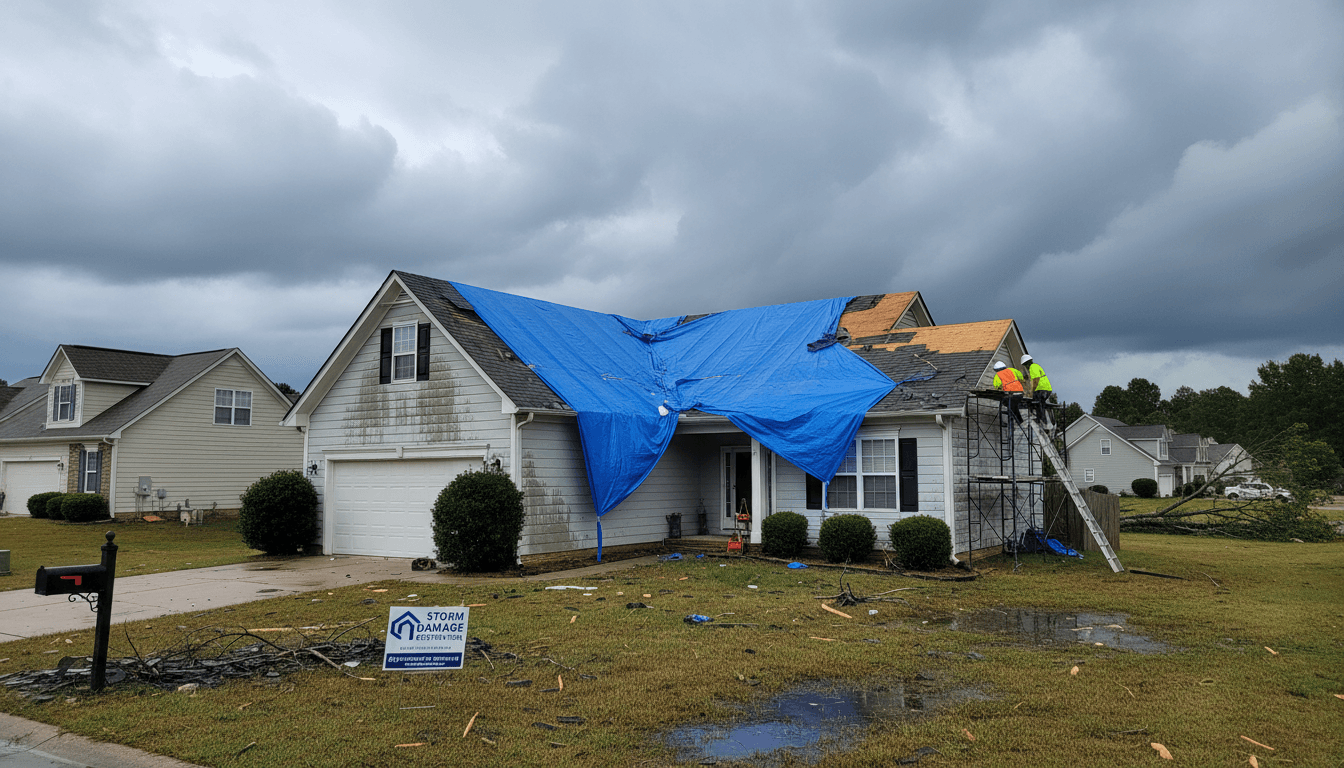
Storm & Weather Damage Restoration
Emergency storm damage response for Charlotte homes affected by hurricanes, severe thunderstorms, and heavy rainfall.
Charlotte's weather patterns deliver a range of severe events that put homes at risk throughout the year. From the intense thunderstorms and microbursts of spring and summer to the remnant hurricanes and tropical storms that track inland through the Carolinas in fall, to the occasional ice storms that coat the Piedmont in winter — Charlotte homeowners face water intrusion threats in every season. At Charlotte Water Damage Restoration, storm damage response is a core part of what we do, and we pre-position crews and equipment during weather events so we can respond when the damage hits.
Severe thunderstorms are Charlotte's most frequent storm damage source. The Charlotte metro area averages 40-50 thunderstorm days per year, many producing winds above 60 mph, heavy rainfall rates exceeding 2 inches per hour, and hail. Wind-driven rain penetrates through damaged shingles, compromised flashing, soffit vents, and window frames. The water finds its way into attics, wall cavities, and living spaces — often in places where the point of entry and the point of visible damage are separated by several feet. We use thermal imaging to trace the full path of water intrusion, not just the wet spot on your ceiling.
Hurricane and tropical storm remnants are Charlotte's most dramatic storm threat. While the city sits 200 miles inland, it regularly receives the remnant circulation from storms that make landfall along the Carolina or Gulf coasts. Hurricane Hugo (1989) devastated the Charlotte area with sustained Category 1 winds far inland. More recently, Florence (2018) and Ian (2022) dropped historic rainfall totals across the region. These events produce both wind damage and flooding — a combination that complicates restoration because roof damage lets rain in from above while rising water pushes in from below.
Ice storms, while less frequent, cause their own pattern of water damage in Charlotte. A quarter-inch of ice accumulation brings down tree limbs onto roofs, collapses gutters, and creates ice dams at roof edges that force meltwater backward under shingles. The 2002 and 2014 ice events caused widespread damage across the Charlotte metro, and homes with older roofing, shallow roof pitches, or poor attic insulation are most vulnerable.
Our storm damage response starts with emergency stabilization. When a tree punches through your roof or wind strips shingles from a section, the immediate priority is stopping active water intrusion. We provide emergency tarping and board-up services to secure the building envelope before rain can cause additional interior damage. Our tarping crews work in conditions that other contractors won't — during active storms when the damage is happening, not the next day when the water has already soaked through.
Once the building is secured, we begin water extraction and damage assessment. We remove standing water, identify all materials affected by the intrusion, and set up structural drying equipment. Storm damage often affects multiple rooms and multiple floors simultaneously, so our drying configurations are larger and more complex than a typical single-source event.
Wind-driven rain that enters through the roof can travel along rafters, ceiling joists, and wall top plates before manifesting as a wet ceiling or wall stain far from the actual penetration point. We trace every water path using thermal imaging and moisture meters, opening inspection holes as needed to confirm the extent of hidden moisture. Missing these concealed wet areas is the most common mistake in storm damage restoration and the primary cause of post-repair mold growth.
For homes with both wind damage and flooding, we address the contaminated floodwater first (Category 3 protocol), then shift to wind-driven rain intrusion cleanup. The two types of water require different handling — floodwater mandates material removal and biocide treatment, while clean rainwater intrusion may only require drying if caught quickly enough.
Throughout the process, we document everything for your insurance claim. Storm damage claims are among the most common in Charlotte, and adjusters expect thorough documentation — photographs of the exterior damage, interior affected areas, moisture readings, equipment logs, and material inventories. We communicate directly with your adjuster to keep the claim moving.
Don't wait for the storm to pass to call. If you have active water entering your home during severe weather, call (704) 385-1018 immediately. We dispatch emergency tarping and stabilization crews during active weather events — because the damage is happening now, not tomorrow.
Our process
How we handle storm & weather damage restoration in Charlotte, step by step.
- 1
Emergency tarping & board-up
We secure the building envelope first — tarping roof penetrations, boarding up broken windows, and stopping active water intrusion before interior damage compounds.
- 2
Water extraction & damage assessment
Standing water is removed and every affected area is identified using thermal imaging and moisture meters, including hidden water paths along rafters and wall cavities.
- 3
Water intrusion path tracing
Thermal imaging tracks water from the entry point through the full path it traveled — along roof decking, rafters, top plates, and wall cavities. Inspection holes confirm hidden moisture.
- 4
Structural drying
Commercial air movers, dehumidifiers, and Injectidry systems dry all affected materials. Multi-room, multi-floor setups are common for storm events.
- 5
Contaminated vs. clean water separation
If both flooding and wind-driven rain intrusion occurred, contaminated floodwater areas receive Category 3 treatment while clean rainwater areas are dried in place when possible.
- 6
Insurance documentation & restoration
Complete photographic documentation, moisture logs, and material inventories support your claim. Damaged materials are replaced and your home is restored to pre-storm condition.
Frequently asked questions
Common questions about storm & weather damage restoration in Charlotte.
Need Storm & Weather Damage Restoration?
Call now for immediate 24/7 emergency response in Charlotte, NC.
(704) 385-1018