24/7 Emergency Service
(704) 385-1018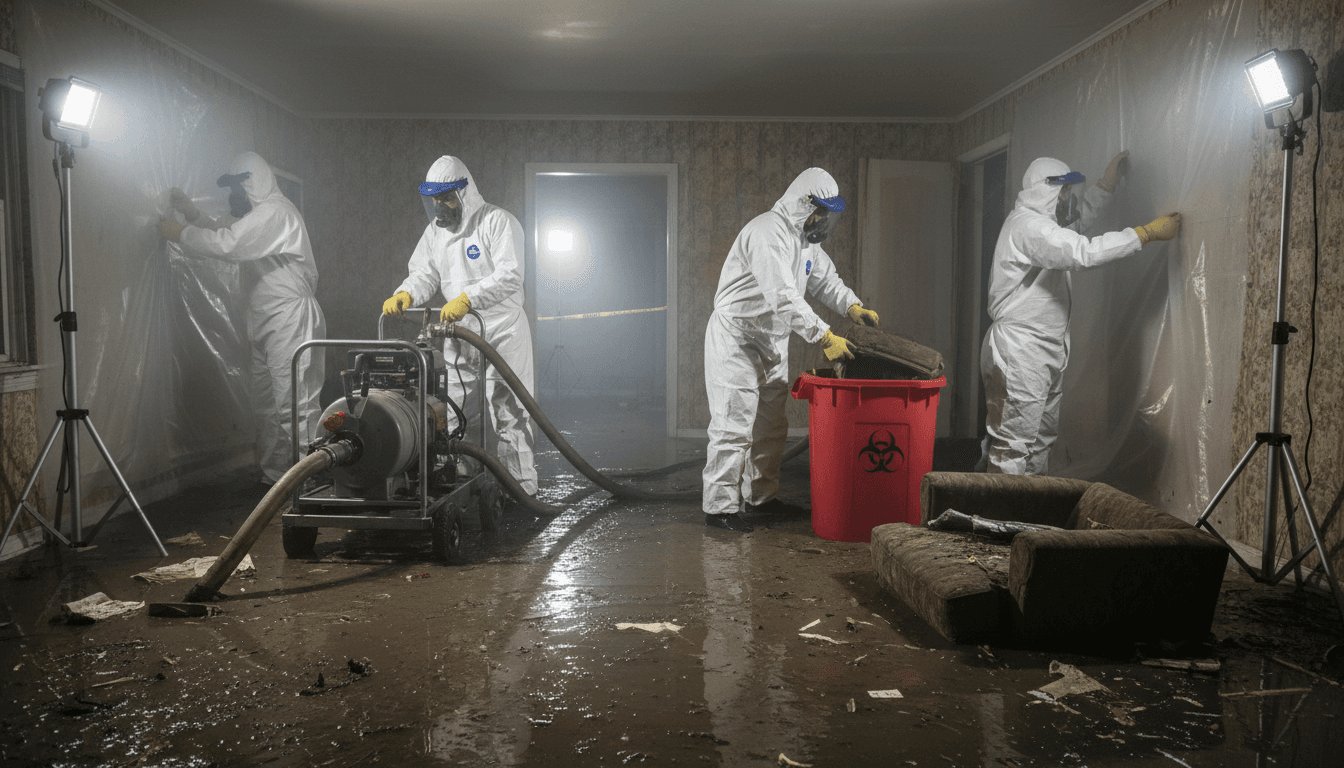
Sewage & Black Water Cleanup
Hazardous sewage backup cleanup with full sanitization for Charlotte homes and businesses.
A sewage backup in your home is one of the most hazardous and distressing water damage events you can face. Unlike a clean water pipe burst, sewage carries bacteria (E. coli, Salmonella), viruses (Hepatitis A, Norovirus), parasites, and chemical contaminants that pose immediate health risks to everyone in the building. At Charlotte Water Damage Restoration, we treat every sewage event as a biohazard situation and respond with the crew, equipment, and protocols the job demands.
The IICRC classifies water damage into three categories. Category 1 is clean water from a supply line or faucet. Category 2 is gray water from dishwashers, washing machines, or sump pumps. Category 3 — black water — is sewage, floodwater, and any water that has contacted biological contaminants. Sewage backups are always Category 3, and the cleanup protocol is significantly more involved than a standard water extraction.
Charlotte's sewer infrastructure contributes to the frequency of backups in certain areas. Much of the city's sewer system dates to the mid-20th century expansion era, and sections of aging clay and cast-iron pipe serve neighborhoods across south Charlotte, east Charlotte, and the older urban core. Tree root intrusion is the most common cause of residential sewer blockages in Charlotte — mature oaks, maples, and pines send roots into pipe joints seeking moisture. Heavy rain events also overwhelm the combined stormwater-sewer connections that still exist in parts of the city, causing backups during the exact storms when you're already dealing with potential flooding.
When you call us for a sewage backup, our crew arrives in full personal protective equipment — Tyvek suits, rubber boots, N-95 or P-100 respirators, face shields, and chemical-resistant gloves. We begin by extracting the contaminated water using dedicated equipment that is decontaminated after every sewage job. We never use the same extraction equipment for clean water events without full sanitization.
After extraction, we remove every porous material that contacted sewage water. This is non-negotiable per IICRC S500 standards: drywall, insulation, carpet, carpet pad, particle board, and any paper-faced or fabric-covered materials that were submerged or splashed by sewage must be removed and disposed of as biohazardous waste. We cut drywall at least 12 inches above the visible water line to account for wicking, and we remove insulation from the full height of affected wall cavities.
The sanitization phase involves multiple applications of hospital-grade antimicrobial and biocide treatments on every remaining surface — framing lumber, concrete, metal, and any non-porous materials. We use EPA-registered products specifically rated for sewage contamination. After treatment, we HEPA-vacuum all surfaces to remove residual particulate matter.
Structural drying follows sanitization. We set up the same commercial drying equipment used for any water damage event — air movers, dehumidifiers, and Injectidry systems as needed — but in a sewage job, we also run HEPA air scrubbers continuously to filter biological particulates from the air throughout the drying period.
Odor control is a significant concern with sewage events. The smell can penetrate porous materials and linger long after the visible contamination is removed. We use hydroxyl generators and thermal fogging with professional-grade deodorizers to neutralize odors at the molecular level rather than simply masking them.
Charlotte-area homes with crawl spaces face additional challenges during sewage backups. Sewage that reaches a crawl space can contaminate the soil, vapor barrier (if present), floor joists, and subfloor. We remove contaminated soil and vapor barriers, treat all structural members, and install new encapsulation materials as part of the restoration.
The restoration phase replaces everything that was removed — new drywall, insulation, flooring, trim, and any fixtures that were contaminated. We coordinate with plumbers for the sewer line repair that caused the backup in the first place, and we can arrange video inspection of the line to identify the root cause (tree roots, pipe collapse, blockage) so the problem doesn't recur.
Sewage backups are covered by most homeowner's insurance policies when caused by a sudden sewer line failure. We document everything — photographs, contamination boundaries, materials removed, sanitization protocols applied, and moisture readings — for your adjuster. Call (704) 385-1018 immediately if you're dealing with sewage in your home. This is not a situation to wait on.
Our process
How we handle sewage & black water cleanup in Charlotte, step by step.
- 1
Biohazard assessment & safety setup
Crew arrives in full PPE. The contamination zone is established, occupants are relocated from affected areas, and the scope of sewage contact is mapped.
- 2
Contaminated water extraction
Dedicated sewage-rated extraction equipment removes all standing black water. Equipment is fully decontaminated after every sewage job.
- 3
Porous material removal
All porous materials that contacted sewage — drywall (cut 12" above water line), insulation, carpet, pad, and particle board — are removed and disposed of as biohazardous waste.
- 4
Antimicrobial sanitization
Multiple applications of EPA-registered biocides and antimicrobial treatments are applied to every remaining surface. HEPA vacuuming follows to remove particulate residue.
- 5
Structural drying with air scrubbing
Commercial drying equipment plus continuous HEPA air scrubbing dry the structure while filtering biological particulates from the air.
- 6
Odor neutralization
Hydroxyl generators and thermal fogging eliminate sewage odors at the molecular level — no masking agents.
- 7
Restoration & sewer line repair coordination
Removed materials are replaced, and we coordinate with plumbers for sewer line repair and video inspection to prevent recurrence.
Frequently asked questions
Common questions about sewage & black water cleanup in Charlotte.
Need Sewage & Black Water Cleanup?
Call now for immediate 24/7 emergency response in Charlotte, NC.
(704) 385-1018