
24/7 Emergency Service
(704) 385-1018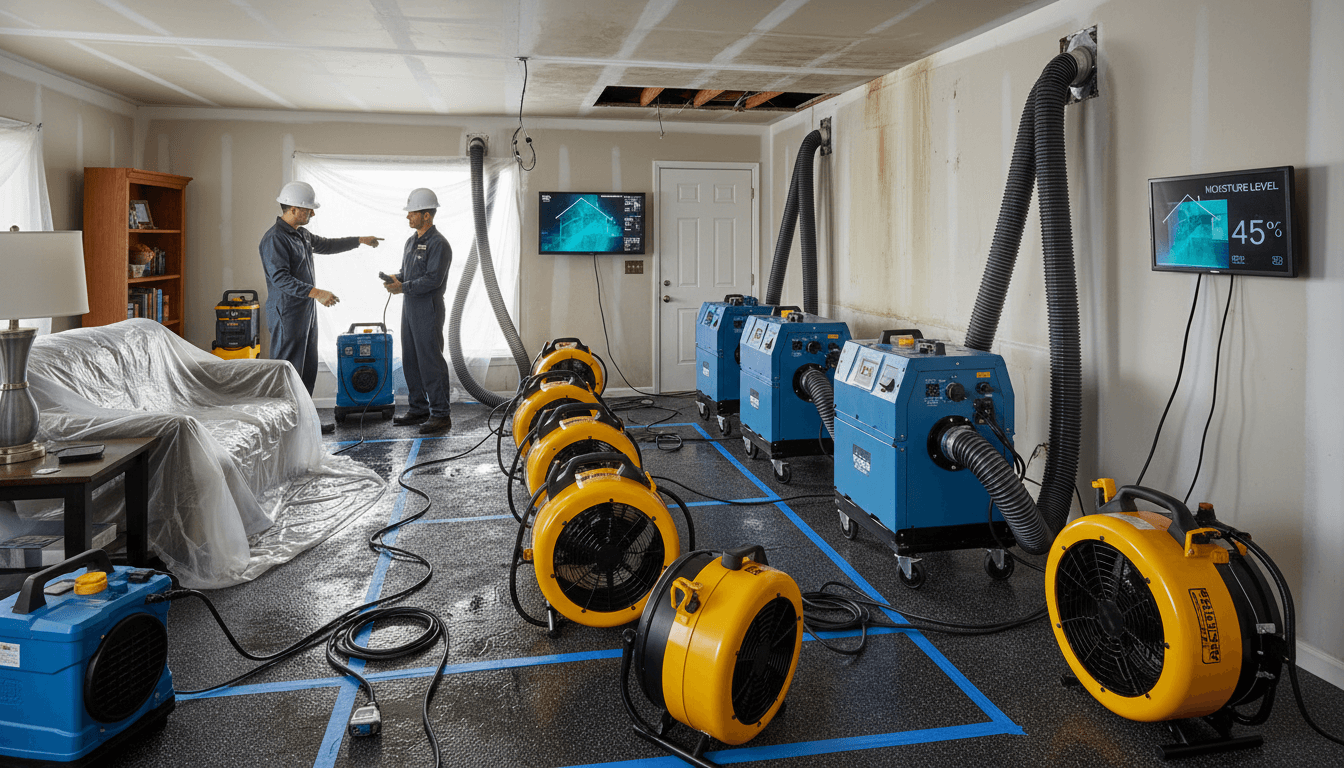
Structural Drying & Dehumidification
Industrial-grade drying equipment to protect your Charlotte home's structure after water damage.
Removing standing water is only half the battle. The moisture that soaks into your walls, subfloors, framing lumber, and insulation after a water event is what causes the real long-term damage — warped floors, crumbling drywall, rusted fasteners, and mold growth. At Charlotte Water Damage Restoration, structural drying is the critical step between water extraction and restoration, and it's where our expertise in Charlotte's specific climate conditions makes the biggest difference.
We deploy commercial-grade drying equipment that operates at a scale far beyond what consumer dehumidifiers and fans can achieve. Our standard drying configuration includes high-velocity air movers (centrifugal and axial types positioned for optimal evaporation), desiccant dehumidifiers that pull moisture from the air regardless of temperature, and refrigerant dehumidifiers for high-humidity environments. For water trapped inside wall cavities, behind cabinetry, or beneath hardwood floors, we use Injectidry systems — specialized panels and hoses that force warm, dry air into enclosed spaces where conventional equipment can't reach.
Charlotte's climate is the single biggest variable in structural drying. The Piedmont region's humidity swings dramatically by season, and each season presents different challenges for drying water-damaged homes.
In summer (June through September), ambient relative humidity averages 70-85% and dew points sit in the 70s. This means the air coming in through open doors, windows, and even the HVAC system carries significant moisture. We run desiccant dehumidifiers continuously and seal off the drying area to prevent humid outdoor air from re-wetting materials. Summer drying timelines in Charlotte typically run 4-6 days for moderate saturation.
In winter (December through February), Charlotte's humidity drops and temperatures can dip below freezing during cold snaps. Lower humidity actually helps drying, but unheated spaces like crawl spaces and garages dry more slowly because cold air holds less moisture and evaporation rates drop. We supplement with warming equipment in these cases. Winter drying timelines typically run 3-5 days.
Spring and fall are transition seasons where Charlotte can swing from 40% humidity to 85% in the same week. We adjust equipment placement and dehumidifier output daily based on changing conditions. These seasons also bring the most water damage events — spring thunderstorms and fall hurricane remnants — so our crews are busiest and most experienced with these fluctuating conditions.
Our drying process is driven by data, not guesswork. We take moisture readings from every affected material at every monitoring visit using pin-type and pinless moisture meters. We track the readings on a drying log that shows the daily trajectory for each material — drywall, framing, subfloor, flooring, and insulation each have different dry standards (the moisture content they should hold under normal conditions). Drywall, for example, should read below 1% on a pinless meter. Framing lumber should be below 15% with a pin-type meter. We don't pull equipment until every reading hits its target.
For hardwood floors, we use floor mat drying systems that sit directly on the wood surface and draw moisture upward through controlled vacuum and heat. This approach saves floors that would otherwise need replacement — a significant cost savings, especially for Charlotte homes with original hardwood in neighborhoods like Dilworth, Elizabeth, and Myers Park.
Crawl space drying is another Charlotte specialty. Many homes in the area have vented crawl spaces that were standard construction practice for decades but are now understood to trap moisture. After a water event, we dry the crawl space with targeted equipment and recommend encapsulation — sealing the space with a vapor barrier and dedicated dehumidifier — to prevent future moisture problems.
Every measurement, equipment placement, and daily reading is documented for your insurance claim. Our drying documentation meets the requirements of every major carrier and provides the evidence adjusters need to approve restoration costs.
Structural drying done wrong — or done halfway — leads to hidden moisture, mold growth within walls, and a second round of damage that costs far more than doing it right the first time. Call (704) 385-1018 to get industrial-grade drying started before moisture has time to do permanent harm.
Our process
How we handle structural drying & dehumidification in Charlotte, step by step.
- 1
Initial moisture mapping
Pin-type and pinless moisture meters measure every affected material — drywall, framing, subfloor, flooring, insulation. Baseline readings are documented for insurance and drying targets.
- 2
Equipment placement
Air movers, dehumidifiers, and specialty equipment (Injectidry panels, floor mat systems) are positioned based on the moisture map and the specific materials affected.
- 3
Environmental control
The drying area is sealed from ambient conditions. Charlotte's outdoor humidity is locked out while dehumidifiers maintain optimal drying conditions inside the space.
- 4
Daily moisture monitoring
Every affected material is re-measured daily. Readings are logged and equipment is adjusted — repositioned, added, or removed — based on the drying trajectory.
- 5
Specialty drying (if needed)
Injectidry systems for wall cavities, floor mat systems for hardwood, and targeted equipment for crawl spaces address moisture that standard air movers can't reach.
- 6
Dry standard verification & equipment removal
Equipment is removed only when every material reads at or below its dry standard. Final readings are documented and the drying certificate is issued for your insurance claim.
Frequently asked questions
Common questions about structural drying & dehumidification in Charlotte.
Need Structural Drying & Dehumidification?
Call now for immediate 24/7 emergency response in Charlotte, NC.
(704) 385-1018